Updated September 2026. Written by Rob Bergeron, Owner–Realtor at Winner Realty, a brokerage based in Louisville, Kentucky and licensed in Kentucky and Indiana. Louisville is home base for us, but we field enough Lexington relocation questions—from buyers moving for UK, UK HealthCare, Toyota's Georgetown plant, and the horse industry—that the market deserved its own guide. We are not going to pretend we have decades of Lexington transaction history the way we do in Louisville. What follows is researched carefully, with every figure dated and sourced, and built the same way as our other relocation guides: real numbers, dated sources, and no ranking of neighborhoods or schools.
If you are relocating to Lexington, Kentucky, here are 19 things worth knowing before you commit to a neighborhood, a school district, or a closing date.
Jump to a chapter:
- 1. Lexington Feels Like a College Town Wrapped in Horse Country
- 2. The Job Market Runs on UK, Healthcare, and Toyota
- 3. Cost of Living and Housing Depend on Where You're Coming From
- 4. Lexington Neighborhoods Have Very Different Personalities
- 5. Schools Are a Major Part of the Lexington Home Search
- 6. Lexington, Louisville, and Southern Indiana Are Different Kentucky-Area Markets
- 7. Lexington Weather Gives You Four Real Seasons
- 8. Pollen and a Few Bugs Come With Bluegrass Country
- 9. Lexington's Food and Bourbon Scene Is Bigger Than Its Size Suggests
- 10. Horse Culture and the Keeneland Calendar Shape Local Life
- 11. Parks, Horse Farms, and the Legacy Trail Are a Real Draw
- 12. Arts, Culture, and Downtown Are Stronger Than Newcomers Expect
- 13. Wildcats Basketball Is Practically a Local Religion
- 14. Traffic, Commuting, and Getting Around Depend on Your Route
- 15. Safety Should Be Checked by Address, Not by Reputation
- 16. Healthcare Is a Genuine Lexington Strength
- 17. Day Trips Put Louisville, Cincinnati, and the Bourbon Trail Within Reach
- 18. Growth and Development Are Changing Lexington Fast
- 19. Moving Logistics Are Easier When You Handle Them Early
1. Lexington Feels Like a College Town Wrapped in Horse Country
Lexington-Fayette County is home to about 330,000 people (U.S. Census Bureau, ACS 2024), making it Kentucky's second-largest city after Louisville. The population and rhythm of the city are shaped heavily by the University of Kentucky, which sits close to downtown and sends its academic calendar rippling through traffic patterns, apartment turnover, and the fall sports schedule. Drive a few minutes past the university and the campus gives way to two-lane roads lined with white plank fencing and Thoroughbred farms. That combination—a large public research university and campus energy on one side, one of the most concentrated horse-breeding regions on earth on the other—is what most newcomers notice first. It is a smaller, denser city than Louisville, built around a compact downtown core rather than a river, and it functions economically almost like two cities layered on top of each other: an academic and healthcare hub, and an agricultural and equine industry that happens to headquarter itself inside city limits.
City and county government here merged into the Lexington-Fayette Urban County Government in 1974, Kentucky's first consolidated city-county government and a model the state later used for Louisville's own 2003 merger with Jefferson County. In practice that means there is one government, one set of services, and one tax structure covering the entire county, whether you land inside the old city limits or out toward the horse farms. Fayette County itself is compact by national standards—about 285 square miles—which is part of why the university, the hospitals, downtown, and open horse pasture can all sit within a short drive of one another. New residents often describe the adjustment as smaller-scale than they expected for a state's second city: an easy downtown to learn, a limited number of main commuting arteries, and a sense that most of daily life happens within a 20-minute radius.
2. The Job Market Runs on UK, Healthcare, and Toyota
The University of Kentucky is Fayette County's largest employer by a wide margin, with roughly 26,846 employees across the university and UK HealthCare, its academic medical system (Locate in Lexington, 2026 employer data). Below UK, the next tier is public sector and healthcare: Fayette County Public Schools (about 6,761 employees), the Lexington-Fayette Urban County Government (about 3,484), Baptist Health Lexington (about 2,851), the Lexington VA Medical Center (about 2,384), and CHI Saint Joseph Health (about 2,029). Amazon runs a distribution operation employing roughly 2,700 people locally, and Lockheed Martin, Lexmark, and Xerox all maintain a presence in the metro, a legacy of Lexington's mid-20th-century run as an office-equipment manufacturing hub.
The single largest private employer connected to the Lexington labor market technically sits outside Fayette County: Toyota Motor Manufacturing Kentucky in Georgetown, about 20 minutes north on I-75, employs roughly 9,300 people (Toyota Motor Manufacturing Kentucky, 2022 figure) and is described by Toyota as its largest vehicle manufacturing plant in North America. A meaningful share of that workforce lives in Fayette County and commutes north rather than the other way around. Beyond those anchors, Lexington has a growing bioscience and technology cluster tied to UK's research programs, along with the agricultural-equine economy—veterinary practices, farm management, bloodstock services, and Keeneland itself—that does not show up on a typical employer list but supports thousands of jobs.
For a household relocating for one specific employer, the commute math differs quite a bit depending on which one it is. UK and UK HealthCare jobs generally point toward neighborhoods close to campus and downtown; Baptist Health Lexington sits south of downtown off Nicholasville Road; and a Toyota job in Georgetown often makes more sense from the north side of the county or from Scott County directly, rather than commuting the full width of Lexington and back out. Tell us your employer and we will build the search radius around the actual drive, not a generic map of the county.
3. Cost of Living and Housing Depend on Where You're Coming From
Lexington's overall cost of living runs about 7 percent below the national average and about 4 percent above the Kentucky state average, with housing costs running roughly 23 percent below the national average (RentCafe, September 2026). Average rent across the metro is about $1,395 a month (RentCafe, September 2026). On home prices, the honest answer is that different sources show meaningfully different numbers, and we would rather tell you that than hand you a single figure with false precision. Redfin puts Lexington's median sale price at $354,807 for the three months ending June 2026, up 5.3 percent year over year, with homes spending a median of 35 days on market. RentCafe's September 2026 figure for the average home price is higher, at $397,363. The Lexington-based Bluegrass REALTORS® association's most recently published monthly snapshot showed a $292,000 median sale price for July 2025, a reminder that regional MLS figures and national aggregators do not always measure the same geography or the same month. Treat any of these as a directional range—roughly the high $300,000s to low $400,000s for a typical single-family home in 2026—rather than a promise, and ask us for the current Bluegrass REALTORS® numbers on the specific area you are considering, since local MLS data is more current than any national site.
For comparison, the national median existing-home price was $434,100 in July 2026 (National Association of REALTORS®), and Louisville's Jefferson County median was $290,000 in August 2026 (Louisville MLS). Lexington tends to run somewhat higher than Louisville for a comparable home, in part because Fayette County has operated under an urban growth boundary since the 1950s that limits how far the city can sprawl in order to protect the horse farms surrounding it—a deliberate land-use choice that keeps buildable land, and therefore housing supply, tighter than in most metros this size.
4. Lexington Neighborhoods Have Very Different Personalities
A note on how we write about neighborhoods, because it matters and because it is the law: we describe housing stock, price range, commute, and physical amenities. We do not rank areas or tell you who lives there, and any agent who does that for you is doing it wrong. Here is what is factually true about a handful of areas people ask about.
Chevy Chase is an established neighborhood close to downtown and UK, with early-to-mid-20th-century homes, a walkable small commercial strip, and a short commute to campus and downtown. Ashland Park, adjacent to it, has larger early-1900s homes on tree-lined streets near the Henry Clay estate. Kenwick, east of downtown, is a bungalow-and-cottage neighborhood with a small commercial corridor and an active neighborhood association. Downtown and the Distillery District (the former industrial corridor along Manchester Street, now home to Town Branch Distillery and several breweries and event venues) offer condos, lofts, and new-build apartments within walking distance of Rupp Arena and the courthouse area. Hamburg, in the northeast near I-75, is Lexington's largest retail and mixed-use development, surrounded by 1990s-to-present subdivisions, apartment complexes, and townhomes, with a commute of roughly 15 to 20 minutes to downtown depending on traffic. Beaumont Centre and Andover, in the south and northeast respectively, are planned communities built from the 1990s through the 2010s with a mix of single-family homes, townhomes, and their own retail centers. The Nicholasville Road corridor running south out of the city is Lexington's primary commercial and multifamily spine, with apartment and condo development stacked along it for miles. South of the county line, Jessamine County (Nicholasville, Wilmore) has become a common landing spot for buyers priced out of Fayette County's tighter supply, with newer subdivisions and a 20-to-30-minute commute into Lexington. Send us the addresses you are considering and we will pull the price history, tax records, and boundary information for each one.
5. Schools Are a Major Part of the Lexington Home Search
Fayette County is served by Fayette County Public Schools, a single countywide district that covers the entire city and county. We do not rate or characterize schools—not here, not in Louisville, not anywhere—because it is not our place to do it and because school quality is deeply personal to a family's needs. What we do instead: for any address you are considering, we will send you the official Fayette County Public Schools attendance-zone map, the relevant Kentucky School Report Card page for that school, and the GreatSchools.org listing, so you can research it the same way we would for our own kids. Jessamine County, Scott County (Georgetown), and Woodford County (Versailles) each run their own districts for buyers who end up looking just outside Fayette County. If private or parochial school is part of your plan, tell us and we will point you to the schools operating in the area rather than guessing at which one fits.
A few structural things worth knowing before you shop: Fayette County Public Schools uses a mix of neighborhood assignment and magnet or optional programs at various grade levels, so, as in Louisville, the school assigned to a given address is something to verify directly with the district rather than assume from a map. Boundaries are periodically redrawn as the county grows, particularly around newer development in the south and east, so even a boundary map from a year or two ago can be out of date. Because school assignment is one of the most common reasons a Lexington buyer narrows a search to a specific pocket of the county, we build the attendance-zone check into the very first conversation about your search, before we start touring homes, rather than after you have already fallen for one.
6. Lexington, Louisville, and Southern Indiana Are Different Kentucky-Area Markets
We get this question constantly, so it is worth addressing directly: Lexington and Louisville are about 75 minutes apart on I-64 and are two distinct markets, not two neighborhoods of the same metro. Louisville is the larger city and job market, sits on the Ohio River, has the state's international air-cargo hub, and generally runs lower on home prices for a comparable house. Lexington is smaller, denser, built around UK and the horse industry, and constrained by its urban growth boundary, which tends to push prices somewhat higher for equivalent housing. Both share Kentucky's tax structure—the 3.5 percent flat state income tax effective January 1, 2026—but the local occupational tax differs: Lexington-Fayette Urban County Government levies a 2.25 percent occupational license fee on wages and net profits (City of Lexington, Kentucky, 2026), compared with Louisville Metro's 2.2 percent for residents. It is a small difference, but it is a real one, and it is worth running on your actual paycheck before you assume the two cities cost the same. Southern Indiana, across the river from Louisville, is a third option entirely with its own tax structure, covered in our Moving to Southern Indiana guide. Winner Realty's transaction history is concentrated in Louisville and Southern Indiana; for Lexington we can walk you through the market and the numbers, and where useful we will connect you with a Lexington-area agent we trust for in-person showings.
7. Lexington Weather Gives You Four Real Seasons
Lexington's climate is close to Louisville's—humid summers, mild winters, long spring and fall shoulder seasons—with a couple of small differences tied to sitting roughly 500 feet higher in elevation and further from the Ohio River valley. Summers bring July highs typically in the mid-to-upper 80s with regular stretches into the 90s and real humidity. Winters are moderate by Midwestern standards, with January lows commonly in the low-to-mid 20s and roughly a foot of snow across a typical season, occasionally running slightly higher than Louisville's totals in a given year because of the elevation. Spring brings the thunderstorm season and, in the western part of the state more than here, tornado risk; Lexington sits in a somewhat lower-risk zone than western Kentucky but storms are still a normal part of spring. Fall is long, colorful, and mild, and it happens to line up with both the fall Keeneland meet and the UK football and basketball calendars, which is a big part of why it's a favorite season for a lot of longtime residents.
The elevation difference from Louisville is modest—Lexington sits close to 980 feet above sea level compared with Louisville's roughly 460 feet—but it is enough that Lexington occasionally sees a winter precipitation event register as snow when Louisville, sitting lower and closer to the Ohio River valley, sees rain or a mix. Neither city gets snow totals anywhere near the upper Midwest or the Northeast, and a snow event that shuts down schools for a day is still treated locally as a notable occurrence rather than routine. If you are coming from a climate with more extreme winters or milder, drier summers, plan for the humidity in July and August to be the bigger adjustment than anything winter brings.
8. Pollen and a Few Bugs Come With Bluegrass Country
Fayette County sits in the middle of the Bluegrass region, which means hardwood forest, pasture grass, and horse farms surround the city on every side, and all of that vegetation produces heavy tree and grass pollen in April and May, similar to Louisville and the rest of central Kentucky. If you deal with seasonal allergies, plan for it. On the insect side, the same pastureland that makes the region beautiful also means mosquitoes in the warmer months, particularly near creeks and low-lying areas, and the occasional tick if you spend time on trails or farmland; standard precautions (repellent, checking after hikes) cover it. None of this is unusual for the region—it is simply the trade-off for living somewhere this green.
Because so much of Fayette County's land is actively farmed pasture rather than paved-over suburb, that trade-off is a bit more front-and-center here than in a typical suburban subdivision. Horse farms use fencing, drainage, and manure management that generally keep the immediate nuisance factor low, but living adjacent to a working farm does mean early-morning equipment noise during hay season and, occasionally, the smell that comes with agricultural land. None of it is a defect; it is simply part of choosing a home near the pastureland that gives the area its character, and it is worth a visit at different times of day if a property backs up to a farm.
9. Lexington's Food and Bourbon Scene Is Bigger Than Its Size Suggests
For a city of its size, Lexington punches well above its weight on food and drink, driven partly by UK's student population and partly by the agricultural economy around it feeding a genuine farm-to-table restaurant scene. Downtown and the surrounding neighborhoods have a dense cluster of independent restaurants, and the Distillery District along Manchester Street has become the city's dedicated bourbon-and-craft-beverage corridor. Town Branch Distillery, operated by Alltech, anchors that district and offers tours and tastings inside city limits, making Lexington one of the few Kentucky Bourbon Trail stops where you can walk to a working distillery from a downtown hotel. The wider Bluegrass region around Lexington is home to several additional distilleries along the Kentucky Bourbon Trail and Bourbon Trail Craft Tour routes, and Lexington functions as a practical home base for exploring them, being closer to the geographic center of the Trail than Louisville is to several stops. Farmers markets, a growing coffee and craft-beer scene, and restaurants built around Kentucky-raised beef, produce, and spirits round out a food identity that is distinct from Louisville's, even though both cities share the state's bourbon heritage.
10. Horse Culture and the Keeneland Calendar Shape Local Life
Horses are not a tourist attraction in Lexington; they are a working industry embedded in the local economy and the social calendar. Keeneland Race Course, just west of downtown, runs two meets a year—a spring meet in April and a fall meet that runs October 2 through 24 in 2026 (Keeneland, 2026)—and both are treated locally the way other cities treat a home opener: offices quiet down, reservations at nearby restaurants get tight, and the infield and paddock are as much a social scene as a betting venue. Outside race weeks, Keeneland also hosts one of the world's most important Thoroughbred auction houses, drawing buyers and breeders from around the globe several times a year, and its grounds host the Toyota Blue Grass Stakes each spring, a Kentucky Derby prep race that draws national attention to the city weeks before Louisville's own Derby weekend. The Kentucky Horse Park, a working horse farm and museum complex just north of the city, hosts equestrian competitions, the Kentucky Derby Museum's sister attractions, and is open to the public with trail rides and horse shows through most of the year. Drive Old Frankfort Pike, Paris Pike, or Old Rosebud Road and you will pass working Thoroughbred farms with their characteristic black plank or white board fencing for miles; several of the region's most prominent breeding operations, including Claiborne Farm, WinStar Farm, and Ashford Stud, are within a short drive of the city. For newcomers, the practical effect is an event calendar and a local identity built substantially around horse racing and breeding, which shows up everywhere from restaurant reservation patterns during meet weeks to school field trips to the Horse Park.
11. Parks, Horse Farms, and the Legacy Trail Are a Real Draw
The Legacy Trail is a paved multi-use path running roughly 12 miles from downtown Lexington out to the Kentucky Horse Park, connecting several neighborhoods, parks, and greenways along the way and functioning as the city's main dedicated cycling and running corridor. Raven Run Nature Sanctuary, in the southeastern part of the county along the Kentucky River palisades, is a 734-acre preserve with hiking trails, wildflower meadows, and river-gorge overlooks, and it is free and open to the public. Masterson Station Park, on the north side, combines sports fields, an equestrian center, and a dog park on a large multi-use tract. The Lexington Arboretum, a joint project between the city and the University of Kentucky, offers walking trails and cultivated gardens close to campus. Beyond the formally designated parks, the surrounding horse farms themselves function as a kind of scenery most cities cannot offer: rolling pasture, mile after mile of fencing, and open sky within a ten-minute drive of downtown, which is a large part of why people who move here for a job end up staying for the landscape.
Jacobson Park, on the east side of the county, adds a reservoir with fishing and paddling access along with additional trails and sports fields, and several smaller neighborhood parks are scattered throughout the county's older subdivisions. For households weighing outdoor access as part of a relocation decision, the combination of a growing paved trail network, a large nature preserve inside the county line, and working agricultural land inside city limits is a different profile than most metros this size offer, where farmland has typically been pushed well outside any reasonable commute.
12. Arts, Culture, and Downtown Are Stronger Than Newcomers Expect
Downtown Lexington has invested heavily in its core over the past decade, and the arts institutions there are long-standing rather than recent additions. The Lexington Opera House, a restored 1886 theater downtown, hosts touring Broadway productions, ballet, and opera. The Kentucky Theatre, a 1922 movie palace on Main Street, still operates as an active cinema and event venue and is a fixture of downtown's identity. The Lexington Art League, the Living Arts and Science Center, and a rotating slate of galleries around downtown and the Distillery District support a working visual-arts community tied loosely to UK's art programs. Cheapside Park and the areas around the old courthouse host a regular farmers market and outdoor events through the warmer months. Combined with the Distillery District's growth as an entertainment corridor, downtown Lexington functions as a genuine cultural center for the region rather than an afterthought next to the horse farms and the university.
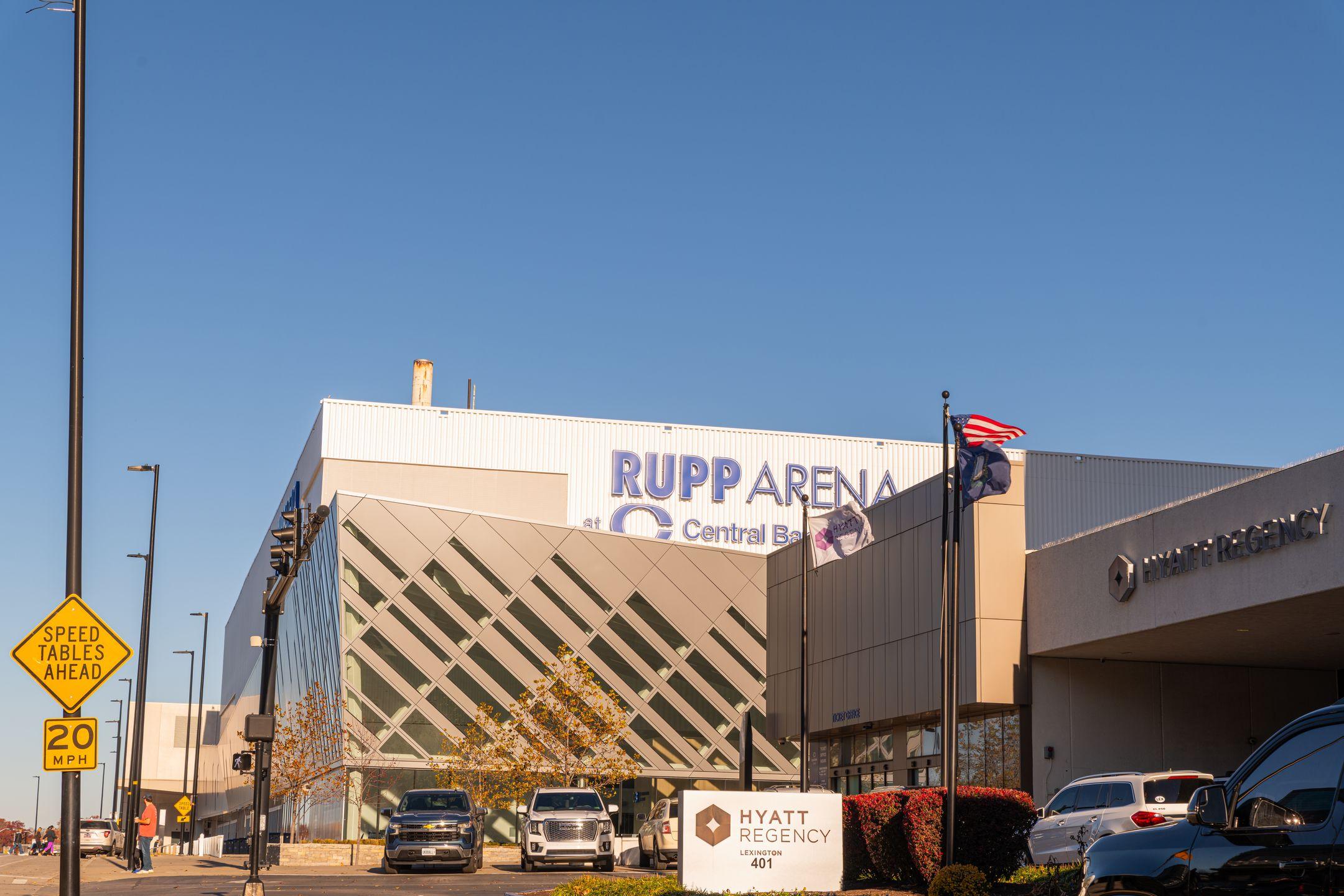
The Lexington Convention Center and the adjoining Rupp Arena complex, downtown, host conventions, concerts, and touring events throughout the year in addition to UK basketball, and the city has continued investing in that downtown core with a mix of public and private redevelopment projects over the past several years. For a newcomer used to a larger city's arts calendar, the fair comparison is that Lexington's cultural scene is more compact but active, concentrated enough downtown that it is easy to find on a Friday night rather than spread across a metro area you need a car and thirty minutes to navigate.
13. Wildcats Basketball Is Practically a Local Religion
This is simply a factual description of local culture, not a subjective claim: University of Kentucky basketball is one of the defining features of life in Lexington. Rupp Arena, downtown adjacent to the convention center, seats over 20,000 for Wildcats home games and is consistently among the highest-attendance arenas in college basketball. Game days shape downtown traffic, restaurant reservations, and hotel occupancy from November through March, and the program's history—multiple national championships and one of the winningest records in college basketball history—means the season is tracked closely across the entire city, not just among students. UK football, at Kroger Field on campus, has built a growing following as well. For newcomers, the practical takeaway is that the sports calendar affects traffic, parking, and short-term rental pricing downtown during game weekends, which is worth factoring in if your move-in date or a scouting trip lands during basketball season.
The rivalry with the University of Louisville is one of the most-discussed topics in the state, and it shows up in casual conversation far more than most transplants expect—expect to be asked, sooner or later, which side you land on, even if your honest answer is that you moved here for a job and do not have a side. Beyond the rivalry itself, UK athletics function as a genuine community gathering point: local businesses build promotions around game days, bars and restaurants near campus and downtown fill up for tip-off, and the football and basketball schedules are treated as fixed points on the local calendar the way a holiday would be treated elsewhere.
14. Traffic, Commuting, and Getting Around Depend on Your Route
New Circle Road (KY 4) forms an inner loop around the older part of the city, similar in function to Louisville's Watterson Expressway, and Man o' War Boulevard forms a wider outer arc through the southern and eastern suburbs, both of them named, fittingly, for the region's equine heritage. I-75 runs north-south along the eastern side of the city toward Georgetown and Cincinnati, and I-64 runs east-west, meeting I-75 on Lexington's north side in an interchange that carries a significant share of the region's through-traffic, including Toyota's Georgetown commuters. The average one-way commute across the metro runs in the low 20-minute range (U.S. Census Bureau, American Community Survey), though that figure is several years old and commute times have likely shifted somewhat with continued growth along the Hamburg and Nicholasville Road corridors; we would rather flag that than overstate precision on a number that changes year to year. Lextran operates the city's public bus system; there is no rail transit. Most households will want a car, though the university area and parts of downtown are walkable enough to manage without one for daily errands.
The practical routing question most buyers ask us is whether to live inside New Circle Road, where the older neighborhoods sit closer to downtown and UK but streets are narrower and parking is tighter, or outside it, where newer subdivisions trade a longer commute for larger lots and easier parking. There is no universally right answer; it comes down to where your job or school is and how much daily drive time you are willing to trade for square footage. Peak-hour congestion is concentrated on the New Circle Road interchanges, the I-75/I-64 junction on the north side, and Nicholasville Road south of downtown, so if a specific route matters to your daily routine, drive it yourself at rush hour before you commit to a house on it.
15. Safety Should Be Checked by Address, Not by Reputation
We do not rank neighborhoods by safety, and we would encourage you to be skeptical of anyone who does, in Lexington or anywhere else. Crime data varies block by block, changes over time, and reputation is a poor substitute for the actual numbers. Lexington Police Department publishes crime-mapping data for the public, and we will pull it for any specific address you are considering, the same way we do for every Louisville client. Use that, combined with a visit at different times of day, rather than a general impression of a neighborhood's name.
This applies as much to newer subdivisions as it does to older, established parts of the city; new construction and higher price points are not a substitute for looking at actual, current data on a specific block. If you are relocating from out of state and cannot visit in person before making a decision, ask us for the public data on any address on your shortlist and we will send it along with the school and flood information in the same package, so you are working from the same facts you would have if you were driving the block yourself.
16. Healthcare Is a Genuine Lexington Strength
Healthcare is one of the deepest parts of Lexington's economy, anchored by two major systems. UK HealthCare, built around UK's Albert B. Chandler Hospital, is the region's academic medical center and a major referral hospital for patients across central and eastern Kentucky, offering the kind of specialized and trauma-level care that smaller regional hospitals refer out to. Baptist Health Lexington operates the other large hospital system in the city, with a broad network of primary and specialty care. Together, the two systems make Lexington a regional healthcare hub in a way that extends well beyond the city's own population, and it is part of why the healthcare sector shows up so heavily on the area's employer list. For households relocating for a healthcare job or simply wanting to know what is available nearby, this is a real strength of the market rather than a marketing line.
Because UK HealthCare and Baptist Health Lexington both draw patients and specialists from well beyond Fayette County, the healthcare sector also brings in a steady flow of physicians, nurses, researchers, and administrative staff relocating specifically for those jobs, which is a large part of why we get as many Lexington relocation questions as we do out of a Louisville-based brokerage. If a healthcare employer is the reason for your move, tell us which system and which facility, since it affects which parts of the county make the most sense for your commute.
17. Day Trips Put Louisville, Cincinnati, and the Bourbon Trail Within Reach
Lexington's location in the center of the state makes it a strong home base for day trips. Louisville is about an hour and a half west on I-64, close enough for a Derby weekend, a concert, or simply a change of scenery without an overnight stay. Cincinnati is roughly an hour and a half north on I-75, putting a major-market airport, professional sports, and a different urban feel within easy reach. The wider Kentucky Bourbon Trail, including Woodford Reserve and Buffalo Trace in nearby Versailles and Frankfort and the Bardstown distilleries further southwest, is largely a half-hour-to-hour drive from Lexington, arguably making Lexington a more central base for touring the Trail than either Louisville or Cincinnati. The Red River Gorge, a nationally known rock-climbing and hiking destination within the Daniel Boone National Forest, sits about an hour southeast. For a city its size, Lexington's location gives it an unusually wide radius of worthwhile weekend options.
Closer to home, Frankfort, the state capital, sits about 25 minutes west on US 60 or I-64, and Berea, known for its arts and crafts community and as the gateway to the Appalachian foothills, is about 40 minutes south. For households who travel for work or want easy access to a major airport, Blue Grass Airport (LEX) sits inside Fayette County with regional and connecting service, while Cincinnati/Northern Kentucky International Airport, about an hour and a half north, offers a wider range of nonstop domestic and international routes. Between the two, most Lexington households end up using whichever airport lines up better with a specific trip rather than defaulting to one.
18. Growth and Development Are Changing Lexington Fast
Lexington has been investing in its downtown core for several years—new residential and mixed-use construction, continued build-out of the Distillery District, and infill development around the courthouse and Cheapside areas. The Hamburg area in the northeast has grown into the city's largest retail and mixed-use corridor, with continued apartment, townhome, and commercial development spreading outward from it along the I-75 and I-64 corridors. Because Fayette County's urban growth boundary limits how far new subdivisions can spread outward to protect the surrounding horse farms, a meaningful share of the metro's growth is now landing just outside the county line, in Jessamine, Scott, and Woodford counties, rather than in Fayette County itself. That land-use dynamic is worth understanding if you are comparing new-construction options: a newer, larger subdivision at a lower price point is more likely to be just across a county line than inside Fayette County proper. We would rather explain that trade-off up front than have a client discover it after falling for a floor plan.
City leadership has continued to prioritize downtown investment and infill development as a way to add housing and commercial space without expanding the urban growth boundary, and multiple mixed-use and apartment projects have been announced or completed downtown and along its edges in recent years. For buyers, the net effect is a market where new construction inside Fayette County tends to be smaller-footprint infill or higher-density product, while larger new subdivisions with more land per lot are increasingly a Jessamine, Scott, or Woodford County story. Ask us for what is currently under construction or recently completed near any area you are considering; that list changes quickly enough that it is worth checking fresh rather than relying on what was true even a year ago.
19. Moving Logistics Are Easier When You Handle Them Early
The state-level logistics of moving to Lexington are the same as moving anywhere in Kentucky. New residents have 30 days to get a Kentucky driver's license at a Driver Licensing Regional Office, and vehicles are titled and registered at the county clerk—the Fayette County Clerk's office, for a Lexington address—where Kentucky's annual vehicle property tax also gets assessed at registration. There is no annual vehicle safety or emissions inspection in Kentucky. Kentucky's homestead exemption, currently $49,100 of assessed value for the 2025–2026 period, is available to homeowners 65 or older or totally disabled, and it is filed with the Fayette County Property Valuation Administrator rather than assumed automatically. Closings in Kentucky are handled by a title company or a real estate attorney, and remote or mobile-notary closings are routine for buyers moving from out of state. Property taxes in Fayette County are billed once a year and depend on which taxing districts a specific address sits in; the PVA publishes those rates so you can check a property before writing an offer. If your move date lines up with a Keeneland meet or a UK home game weekend, book movers, hotels, and showing appointments earlier than you otherwise would—those weeks compress the city's availability in ways that catch a lot of newcomers off guard.
Two ways to get started
The thirty-second way: email rob@thewinnerrealty.com with your current city, your target month, your budget, and what is bringing you to Lexington, and we will send back what we know, point you to a Lexington-area agent we trust for in-person showings, and stay involved through closing.
The fifteen-minute way: schedule a relocation planning call and we will walk through the numbers in this guide against your specific situation, including the Kentucky-versus-elsewhere tax comparison if that is relevant to your move.
Related guides: Relocating to Kentucky · Relocating to Louisville · Moving to Southern Indiana · 19 Things to Know Before Moving to Louisville
Winner Realty is an Equal Housing Opportunity brokerage licensed in Kentucky and Indiana. Rob Bergeron is a licensed Kentucky Realtor (License #219325). Lisa Tucker, Principal Broker. Figures cited from the U.S. Census Bureau (ACS 2024, and ACS commute-time estimates), the Kentucky Department of Revenue, the City of Lexington, Kentucky (occupational license fee rate, 2026), Redfin (June 2026), RentCafe (September 2026), Bluegrass REALTORS® (Market Data, most recently published snapshot, July 2025), the National Association of REALTORS® (July 2026), Locate in Lexington / Greater Lexington employer data (2026), Toyota Motor Manufacturing Kentucky (Toyota Newsroom, employee count as of 2022), and Keeneland Race Course (2026 meet dates). Prices, rates, and figures change; verify current numbers and consult a CPA on your specific tax situation.
Bonus: If an Employer Is Paying for the Move, a Few Things Work Differently
If your move here is being handled by an employer, an HR team, or a relocation management company rather than paid for out of pocket, a few things about the process change. Some companies give a transferee a lump-sum relocation benefit and let them manage the move on their own; others run a fully managed move through an RMC, which assigns vendors — moving company, temporary housing, and a local real estate agent — at each step and expects that agent to work inside its reporting and timeline rather than around it. Either way, you're often house-hunting on a tighter runway than someone moving on their own schedule, sometimes from temporary housing while you look. If your move to Lexington is being handled by an employer, HR team, or mobility company, see our corporate relocation services page for how we work with mobility teams and RMC case managers across Louisville, Lexington, and Southern Indiana.